
ICU vs Ventilator Support: What’s the Difference and Why It Matters

Bone Bruise (Bone Contusion): Symptoms, Causes, Diagnosis & Effective Treatment Options
April 21, 2026
How Laparoscopic Surgery Helps: Benefits, Procedure & Faster Recovery Explained
April 29, 2026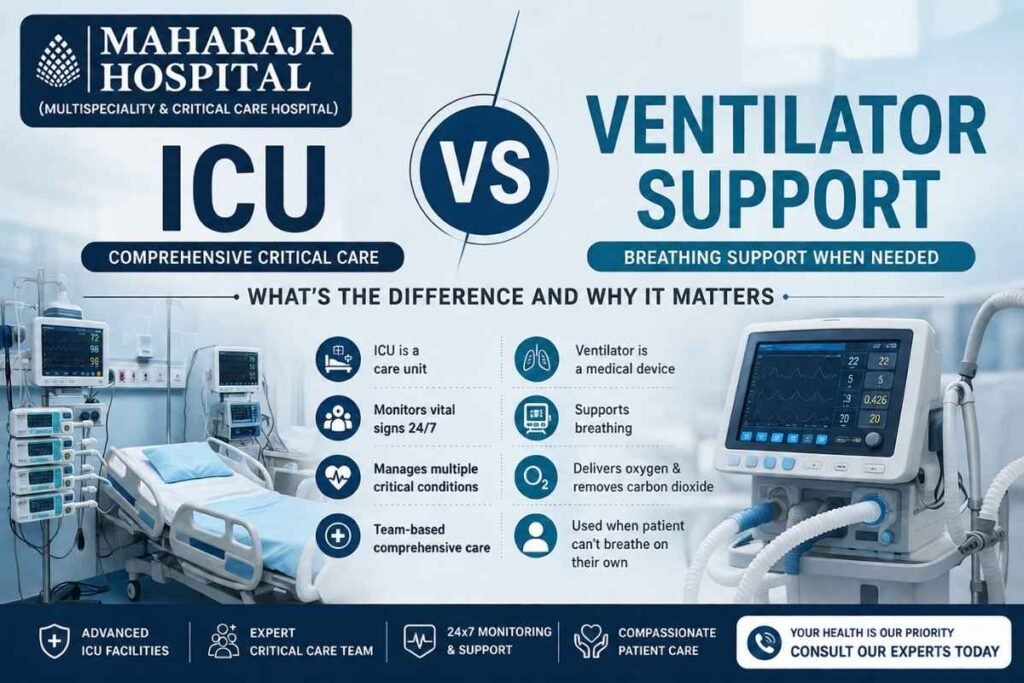
When a patient’s condition becomes serious, terms like “ICU” and “ventilator support” are often used. Many people assume they mean the same thing or are used interchangeably, but that’s not accurate. Understanding the difference between ICU care and ventilator support can help families make informed decisions and reduce confusion during critical moments.
At Critical Care Hospital in Rewari, patients receive advanced monitoring and life-saving treatments tailored to their condition, including ventilator support when required.
What Is an ICU?
The Intensive Care Unit (ICU) is a specialized section of a hospital designed to care for patients with severe, life-threatening conditions. Patients admitted to the ICU need constant monitoring, advanced medical equipment, and expert supervision.
Key Features of ICU Care
• 24/7 monitoring of vital signs like heart rate, blood pressure, and oxygen levels
• Availability of specialized doctors and trained nursing staff
• Advanced equipment for life support and emergency care
• Immediate response to sudden changes in a patient’s condition
ICU care is not limited to one type of treatment. It is a comprehensive care environment where multiple therapies, including ventilator support, can be provided.
What Is Ventilator Support?
A ventilator is a machine that helps a patient breathe when they are unable to do so effectively on their own. It delivers oxygen to the lungs and removes carbon dioxide, ensuring the body gets the oxygen it needs.
When Is Ventilator Support Needed?
• Severe lung infections or pneumonia
• Respiratory failure or difficulty in breathing
• During major surgeries requiring anesthesia
• Trauma or injury affecting breathing
• Conditions like COVID-19 or severe asthma attacks
Ventilator support can be used inside an ICU or in other monitored settings, depending on the severity of the patient’s condition.
ICU vs Ventilator: Understanding the Core Difference
The main confusion arises because ventilators are often used inside ICUs. However, they are not the same thing.
Key Differences
• ICU is a place, while a ventilator is a medical device
• ICU provides overall critical care, including monitoring and multiple treatments
• A ventilator is specifically used to assist or replace breathing
• Not all ICU patients need a ventilator
• Not all patients on ventilators are always in the ICU (though most critical cases are)
In simple terms, the ICU is the environment of care, and the ventilator is one of the tools used within that environment.
When Does a Patient Need ICU Care?
ICU admission depends on the severity of the illness or injury.
Common Reasons for ICU Admission
• Severe infections or sepsis
• Major surgeries and post-operative complications
• Heart attack or stroke
• Multiple organ failure
• Serious accidents or trauma
Patients in the ICU require continuous observation and quick medical intervention, which cannot be provided in general wards.
When Is Ventilator Support Required?
Ventilator support is used when a patient cannot maintain normal breathing.
Signs That Ventilator Support May Be Needed
• Low oxygen levels in the blood
• High carbon dioxide levels
• Extreme breathing difficulty or fatigue
• Loss of consciousness affecting breathing
• Failure of lungs to function properly
The decision to use a ventilator is based on clinical evaluation and diagnostic tests.
Types of Ventilator Support
Ventilator support can vary depending on the patient’s condition.
Common Types
• Invasive Ventilation – A tube is inserted into the airway for full breathing support
• Non-Invasive Ventilation – Oxygen is delivered through a mask without inserting a tube
Doctors choose the type based on how severe the respiratory condition is.
How Long Does a Patient Stay on a Ventilator?
The duration of ventilator support varies widely.
Factors That Affect Duration
• Severity of the illness
• Patient’s overall health and age
• Response to treatment
• Presence of underlying conditions
Some patients may need support for a few hours, while others may require it for days or even weeks.
Risks and Recovery
Both ICU care and ventilator support are life-saving but may involve certain risks if prolonged.
Possible Challenges
• Risk of infections
• Muscle weakness due to prolonged immobility
• Difficulty in weaning off the ventilator in some cases
However, with proper care, monitoring, and rehabilitation, many patients recover successfully.
Role of Specialized Care in Recovery
Effective critical care is not just about machines; it depends on the expertise of the medical team and timely decisions.
At Maharaja Hospital, a multidisciplinary approach ensures that patients receive coordinated care involving critical care specialists, physicians, and rehabilitation experts. For patients with injuries or post-surgical needs, support from departments like Orthopedic Hospital in Rewari plays an important role in overall recovery.
Why Understanding the Difference Matters
Knowing the difference between ICU and ventilator support helps families:
• Make informed medical decisions
• Understand the patient’s condition better
• Communicate effectively with doctors
• Reduce fear and misconceptions
Clear knowledge can make a stressful situation slightly more manageable.
When to Seek Immediate Medical Help
Critical conditions often develop quickly, so timely action is essential.
Seek urgent care if you notice
• Severe breathing difficulty
• Sudden chest pain
• Loss of consciousness
• High fever with confusion
• Serious injuries or accidents
Early medical intervention can prevent complications and improve outcomes.
Final Thoughts
ICU care and ventilator support are both essential components of modern critical care, but they serve different purposes. While the ICU provides a controlled and monitored environment for critically ill patients, ventilators are used when breathing support becomes necessary.