
Bone Bruise (Bone Contusion): Symptoms, Causes, Diagnosis & Effective Treatment Options

How to Manage Diabetes Naturally: Proven Ways to Control Blood Sugar Levels
April 14, 2026
ICU vs Ventilator Support: What’s the Difference and Why It Matters
April 27, 2026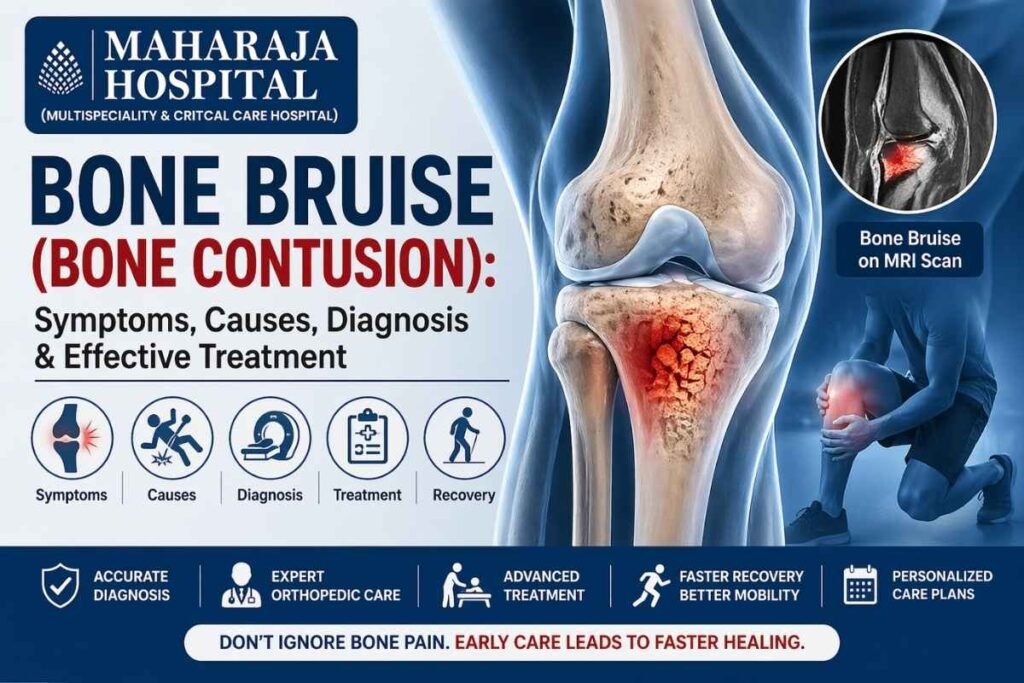
A bone bruise, also known as a bone contusion, is more serious than a typical soft tissue bruise. It occurs when there is damage to the bone tissue without a complete fracture. While it may not always be visible externally, it can cause deep pain and discomfort that affects daily activities.
At Orthopedic Hospital in Rewari, bone bruises are carefully evaluated using advanced diagnostic tools to ensure accurate treatment and faster recovery.
What Is a Bone Bruise?
A bone bruise happens when there is micro-damage to the inner structure of the bone, often due to trauma or excessive stress. It lies somewhere between a minor injury and a full fracture.
Unlike regular bruises that affect the skin, bone bruises impact the deeper layers, making them more painful and slower to heal.
Common Symptoms of a Bone Bruise
Bone bruises can be easy to ignore at first, but the symptoms usually persist longer than a typical bruise.
Key Symptoms to Watch For
• Deep, aching pain in the affected area
• Swelling and tenderness
• Stiffness in the joint near the injury
• Pain that worsens with movement or pressure
• Limited range of motion
If these symptoms last for several days or worsen over time, medical evaluation is important.
Causes of Bone Bruises
Bone bruises are usually caused by direct impact or repeated stress on a bone.
Common Causes Include
• Sports injuries or falls
• Road accidents or sudden trauma
• Twisting injuries affecting joints
• Overuse or repetitive stress (common in athletes)
• Impact injuries during physical activities
They are often seen in joints like the knee, hip, ankle, and wrist.
How Is a Bone Bruise Diagnosed?
Diagnosing a bone bruise requires more than a basic physical examination.
Diagnostic Methods
• Physical examination to assess pain and swelling
• X-rays to rule out fractures
• MRI scan (most effective) to detect bone bruising
Since bone bruises are not visible on standard X-rays, MRI plays a crucial role in confirming the condition.
Treatment Options for Bone Bruises
Treatment focuses on reducing pain, promoting healing, and preventing further damage.
Common Treatment Approaches
• Rest and activity modification to avoid stress on the bone
• Ice therapy to reduce swelling
• Pain relief medications as prescribed
• Physiotherapy to restore strength and movement
• Bracing or support in some cases
In most cases, bone bruises heal without surgery, but proper care is essential to avoid complications.
How Long Does a Bone Bruise Take to Heal?
Healing time can vary depending on the severity of the injury.
Typical Recovery Timeline
• Mild cases: 2 to 4 weeks
• Moderate cases: 4 to 8 weeks
• Severe cases: Several months
Ignoring the injury or returning to activity too soon can delay healing.
When Should You See a Doctor?
It’s important not to underestimate persistent joint or bone pain.
Seek Medical Attention If
• Pain does not improve after a few days
• Swelling increases or does not reduce
• Difficulty in movement continues
• Pain becomes severe even at rest
Early diagnosis helps prevent further complications and ensures proper recovery.
Get Expert Care for Bone Injuries
Bone bruises may seem minor, but without proper care, they can lead to long-term discomfort or joint problems. A timely diagnosis and the right treatment plan can make a significant difference in recovery.
If you’re experiencing ongoing bone or joint pain, consult an orthopedic specialist for a detailed evaluation and personalized care plan.