Malaria Explained: Causes, Symptoms, Diagnosis, Treatment & Prevention

Why Women Face Joint Issues: Signs, Nutrition & Care
May 16, 2026
The Importance of Iron in Pregnancy: Protecting Both Mother & Baby | Maharaja Hospital
May 28, 2026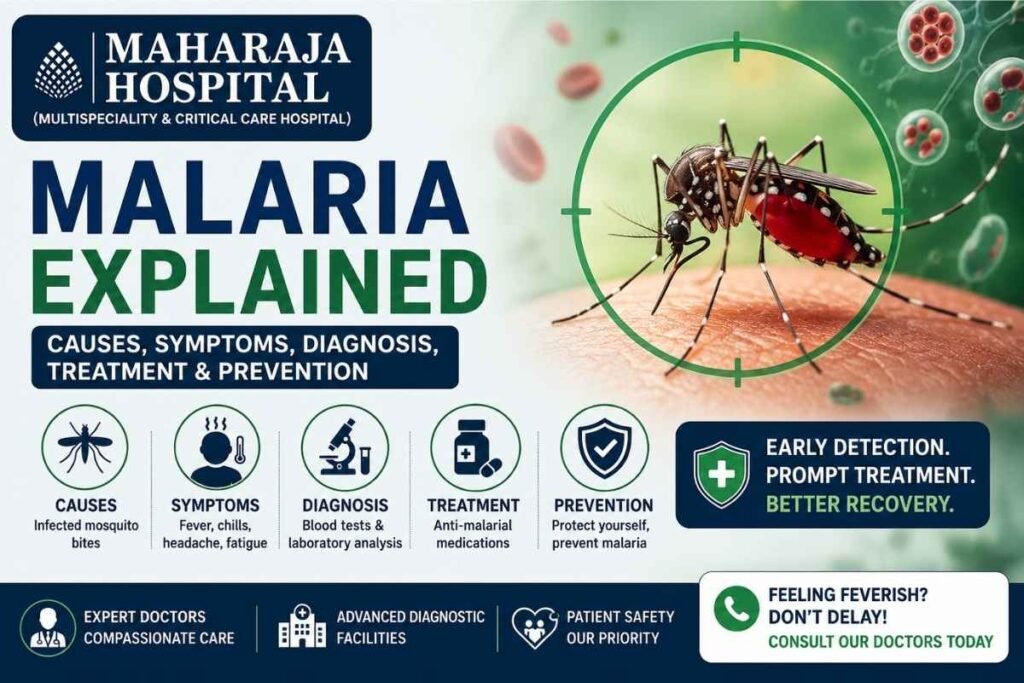
Malaria is a serious mosquito-borne disease that continues to affect millions of people worldwide, especially in tropical and subtropical regions. While many people think malaria is just another fever, it can quickly become dangerous if left untreated. Early diagnosis, timely treatment, and proper prevention can make a major difference in recovery and reduce complications.
At Maharaja Hospital, timely medical evaluation and proper treatment help patients recover safely while preventing severe health risks linked to malaria.
What Is Malaria?
Malaria is an infectious disease caused by Plasmodium parasites, which are transmitted to humans through the bite of infected female Anopheles mosquitoes.
Once the parasite enters the bloodstream, it travels to the liver, multiplies, and then infects red blood cells. This leads to fever, chills, weakness, and other symptoms.
Malaria can range from mild to severe depending on:
• Type of parasite
• Patient’s immunity
• Age
• Speed of treatment
• Overall health condition
Without treatment, severe malaria can affect vital organs and become life-threatening.
What Causes Malaria?
The primary cause of malaria is a bite from an infected mosquito. However, the infection spreads when parasites enter the bloodstream.
Common Causes and Risk Factors
• Mosquito bites in malaria-prone areas
• Poor sanitation and stagnant water
• Rainy seasons increasing mosquito breeding
• Weak immune system
• Lack of mosquito protection
• Traveling to high-risk areas
People living in humid or tropical environments are often at higher risk.
Types of Malaria Parasites
Different parasites can cause malaria.
Common Types Include
• Plasmodium falciparum – Most severe and potentially life-threatening
• Plasmodium vivax – Common and can relapse
• Plasmodium malariae – Less common but long-lasting
• Plasmodium ovale – Rare but can return later
• Plasmodium knowlesi – Mostly found in specific regions
The severity of symptoms can vary based on the parasite type.
Common Symptoms of Malaria
Malaria symptoms may appear within days or weeks after infection.
Early Symptoms
• High fever
• Chills and shivering
• Sweating
• Headache
• Fatigue
• Muscle pain
• Nausea or vomiting
• Body weakness
Because these signs often resemble viral fever or flu, many people ignore them initially.
Serious Symptoms That Need Immediate Care
Severe malaria can quickly worsen.
Warning Signs
• Difficulty breathing
• Confusion or seizures
• Severe weakness
• Yellowing of skin (jaundice)
• Rapid heartbeat
• Low blood pressure
• Severe dehydration
• Loss of consciousness
These symptoms require urgent medical attention.
How Malaria Is Diagnosed
Proper diagnosis is essential because malaria can resemble other infections.
Doctors usually begin with:
• Physical examination
• Travel and exposure history
• Fever pattern assessment
Diagnostic Tests Include
• Blood smear test
• Rapid diagnostic tests (RDTs)
• Complete blood count (CBC)
• Liver and kidney function tests in severe cases
Blood testing helps identify the malaria parasite and determine severity.
Treatment for Malaria
Treatment depends on the parasite type, severity, and patient’s condition.
Common Treatment Options
• Anti-malarial medications
• Fever management
• Hydration support
• Monitoring blood levels
• Hospital care for severe malaria
Most mild to moderate cases recover well with early treatment.
Severe Malaria Treatment
In critical cases, treatment may include:
• IV anti-malarial drugs
• Oxygen support
• Intensive monitoring
• Organ support if complications develop
Timely treatment significantly improves survival.
Why Early Treatment Matters
Ignoring malaria symptoms can lead to serious complications.
Untreated malaria may affect:
• Brain
• Liver
• Kidneys
• Lungs
• Blood circulation
Complications may include:
• Severe anemia
• Organ failure
• Cerebral malaria
• Respiratory distress
• Shock
This is why early diagnosis is critical.
At Maharaja Hospital, patients with fever-related illnesses receive prompt evaluation from experienced specialists, including access to a General Physician in Rewari for proper diagnosis and treatment planning.
Can Malaria Be Prevented?
Yes. Prevention is one of the most effective ways to reduce malaria risk.
Ways to Prevent Malaria
• Use mosquito nets while sleeping
• Apply mosquito repellents
• Wear full-sleeved clothing
• Avoid stagnant water near homes
• Use indoor insect sprays
• Keep surroundings clean
• Close windows during peak mosquito hours
• Seek preventive medication when traveling to high-risk areas
Simple prevention steps can significantly reduce exposure.
Who Is at Higher Risk?
Some individuals are more vulnerable to severe malaria.
High-Risk Groups
• Children
• Pregnant women
• Elderly adults
• People with weak immunity
• Travelers to endemic regions
• Patients with chronic illness
These groups need faster evaluation if symptoms appear.
Recovery From Malaria
Recovery depends on:
• Early diagnosis
• Severity of infection
• Proper medication
• Patient immunity
• Hydration and rest
Recovery Tips
• Complete the full medication course
• Drink enough fluids
• Get proper rest
• Follow-up if symptoms return
• Avoid self-medication
Most patients recover well if treated early.
When Should You See a Doctor?
Don’t wait if symptoms continue.
Seek Medical Help If
• Fever lasts more than 1–2 days
• Chills become severe
• Vomiting continues
• Weakness worsens
• Difficulty breathing appears
• Confusion develops
• Jaundice is visible
Delaying treatment can increase complications.
Final Thoughts
Malaria is not just a seasonal fever. It is a serious infectious disease that can become dangerous without timely treatment. Recognizing early symptoms, getting tested quickly, and starting proper treatment can prevent major health complications.
The best protection comes from awareness, mosquito prevention, and early medical care. If you or someone around you experiences persistent fever, chills, or weakness, getting evaluated early can make recovery faster and safer.