How Laparoscopic Surgery Helps: Benefits, Procedure & Faster Recovery Explained

ICU vs Ventilator Support: What’s the Difference and Why It Matters
April 27, 2026
Why Does Your Hip Hurt While Walking? Causes, Symptoms & Treatment Explained
May 8, 2026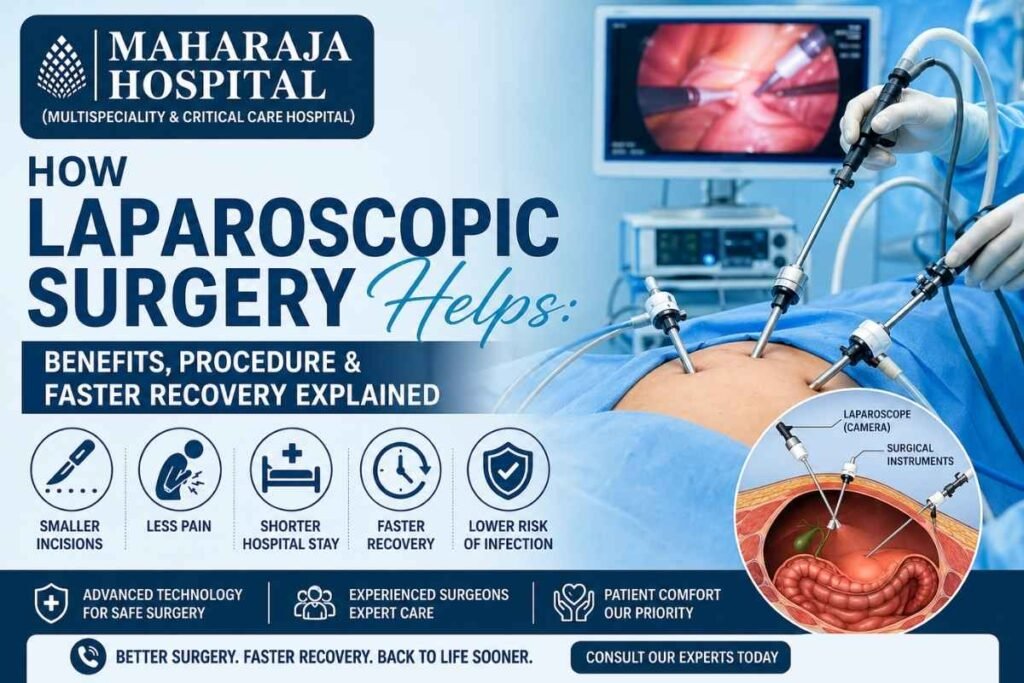
If you’ve been advised surgery, your first concern is usually simple: how painful will it be and how long will recovery take? This is exactly where laparoscopic surgery makes a real difference.
Instead of large cuts, long hospital stays, and slow healing, laparoscopic surgery focuses on minimal invasion, quicker recovery, and better comfort. But let’s not oversell it. It’s not magic. It’s a smarter technique that works well when used in the right cases.
What Is Laparoscopic Surgery?
Laparoscopic surgery, also known as keyhole surgery, is a modern method where doctors perform procedures through small incisions using a camera and specialized tools.
A thin tube with a camera (laparoscope) is inserted into the body, giving the surgeon a clear internal view on a screen. This allows precise surgery without the need for large cuts.
It is commonly used for:
• Gallbladder removal
• Hernia repair
• Appendix surgery
• Gynecological procedures
• Abdominal surgeries
At Laparoscopic Surgeries in Rewari, this technique is widely used to improve patient comfort and reduce recovery time.
How Laparoscopic Surgery Actually Helps Patients
Let’s cut the fluff. Patients care about three things: pain, recovery, and getting back to normal life. This technique directly impacts all three.
Smaller Cuts Mean Less Pain
Traditional surgery involves large incisions, which naturally cause more tissue damage. Laparoscopic surgery uses tiny cuts, which means:
• Less pain after surgery
• Reduced need for strong painkillers
• Lower discomfort during recovery
You’re not dealing with the same level of trauma your body would face in open surgery.
Faster Recovery Time
This is the biggest practical advantage.
With laparoscopic surgery:
• Hospital stays are shorter
• Patients often recover within days, not weeks
• Return to daily activities happens faster
That’s a real, noticeable difference, especially for working individuals.
Minimal Scarring
Large scars are not just cosmetic issues. They can affect confidence and healing.
With laparoscopic surgery:
• Scars are small and less visible
• Healing is cleaner and quicker
• Long-term skin impact is minimal
Lower Risk of Infection
Smaller incisions reduce exposure to external contaminants.
This leads to:
• Lower chances of infection
• Faster wound healing
• Fewer complications
It’s not risk-free, but it’s definitely safer compared to traditional open methods.
Shorter Hospital Stay
Let’s be honest. Nobody wants to stay in a hospital longer than needed.
Laparoscopic surgery helps by:
• Reducing the need for extended monitoring
• Allowing early discharge
• Lowering overall treatment cost
How the Procedure Works
Understanding the process removes unnecessary fear.
Here’s what actually happens:
• The patient is given anesthesia
• Small incisions are made
• A laparoscope (camera) is inserted
• The surgeon views the internal organs on a screen
• Surgical tools are used through small openings
• The procedure is completed with precision
• Incisions are closed with minimal stitches
Everything is controlled, precise, and designed to minimize damage.
Is Laparoscopic Surgery Safe?
Yes, but don’t assume it’s automatically the best option for everyone.
It is generally safe when:
• Performed by experienced surgeons
• Done in a well-equipped hospital
• The patient is properly evaluated beforehand
However, in complex or emergency cases, traditional surgery may still be the safer choice.
Who Should Consider Laparoscopic Surgery?
This method works best for specific conditions.
Ideal Candidates Include:
• Patients with gallstones
• Hernia cases
• Appendix problems
• Certain abdominal conditions
• Patients seeking faster recovery
Doctors always evaluate whether the patient is suitable before recommending it.
When Laparoscopic Surgery May Not Be Suitable
Here’s where you need to stay realistic.
It may not be ideal if:
• The condition is too advanced
• There are complications from previous surgeries
• There is significant internal damage
• The patient has certain health risks
In such cases, open surgery might actually be safer.
Recovery After Laparoscopic Surgery
Recovery is usually quicker, but it still requires discipline.
What to Expect:
• Mild pain for a few days
• Early movement is encouraged
• Gradual return to normal diet
• Follow-up care is important
Most patients start feeling normal within a week, but full recovery depends on the procedure.
Why Choosing the Right Hospital Matters
This is where many people make mistakes.
The success of laparoscopic surgery depends on:
• Surgeon experience
• Technology and equipment
• Post-surgery care
At Orthopedic Hospital in Rewari, patients benefit from experienced specialists, advanced surgical techniques, and proper recovery support, which plays a major role in outcomes.
Final Thoughts
Laparoscopic surgery is not just a trend. It’s a practical improvement in how surgeries are performed. Less pain, faster recovery, and fewer complications make it a strong option for many patients.
But don’t blindly choose it just because it sounds better. The right treatment depends on your condition, not preferences.
Get a proper evaluation, understand your options, and choose what actually works for your health. That’s how you avoid complications and recover the right way.