Why Does Your Hip Hurt While Walking? Causes, Symptoms & Treatment Explained

How Laparoscopic Surgery Helps: Benefits, Procedure & Faster Recovery Explained
April 29, 2026
Why Women Face Joint Issues: Signs, Nutrition & Care
May 16, 2026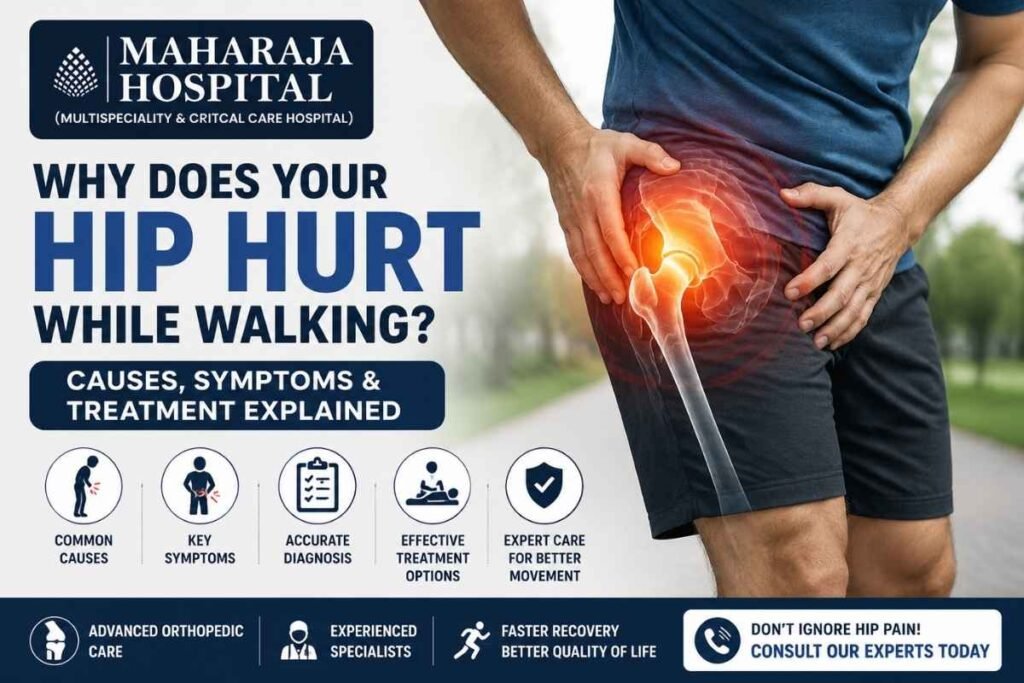
Hip pain while walking is something many people ignore at first. Some assume it’s just muscle strain, aging, or temporary discomfort. But when the pain keeps coming back, affects movement, or starts interfering with daily life, it’s usually a sign that something deeper needs attention.
The hip joint plays a major role in supporting body weight and helping the body move smoothly. Even a small problem in this area can make simple activities like walking, climbing stairs, or standing uncomfortable.
At Orthopedic Hospital in Rewari, patients with hip pain are evaluated carefully to identify the exact cause and provide the right treatment before the condition becomes more serious.
Why Hip Pain Happens While Walking
Walking puts repeated pressure on the hip joint. When there is inflammation, injury, joint damage, or muscle imbalance, that pressure can trigger pain.
The discomfort may feel:
• Sharp or stabbing
• Dull and aching
• Burning around the hip area
• Pain spreading to the thigh or lower back
Some people experience pain only while walking, while others may also feel stiffness after sitting or difficulty moving the leg normally.
Common Causes of Hip Pain While Walking
Hip pain is not always caused by one single issue. Several conditions can affect the hip joint and surrounding muscles.
Arthritis in the Hip Joint
One of the most common reasons is arthritis.
Osteoarthritis
This happens when the protective cartilage inside the joint gradually wears away. As the cushioning reduces, bones rub against each other, causing:
• Pain during walking
• Joint stiffness
• Reduced flexibility
• Clicking or grinding sensation
This condition is more common in older adults but can also affect younger individuals due to joint stress or injury.
Rheumatoid Arthritis
This is an autoimmune condition where the body attacks its own joints, leading to inflammation and pain.
Muscle Strain and Overuse
Sometimes the problem is not the bone or joint itself but the surrounding muscles and tendons.
Hip muscles can become strained due to:
• Excessive physical activity
• Poor posture
• Sudden twisting movements
• Sports injuries
Overuse injuries are common among runners, gym-goers, and individuals with physically demanding jobs.
Hip Bursitis
Small fluid-filled sacs called bursae help reduce friction around the hip joint. When these sacs become inflamed, it causes bursitis.
Symptoms of Hip Bursitis
• Pain on the outer side of the hip
• Increased discomfort while walking or climbing stairs
• Tenderness when pressing the hip area
Ignoring bursitis can make daily movement increasingly painful.
Sciatica and Nerve Compression
Not all hip pain actually starts in the hip.
Sometimes, nerve compression in the lower back causes pain that travels into the hip and leg. This is commonly known as sciatica.
Signs of Nerve-Related Hip Pain
• Burning pain
• Tingling or numbness
• Pain radiating down the leg
• Weakness while walking
This type of pain often worsens with prolonged standing or movement.
Hip Labral Tear
The labrum is a ring of cartilage around the hip socket. A tear in this area can lead to pain and instability.
Common Causes
• Sports injuries
• Repetitive hip movement
• Trauma or falls
Patients often feel:
• Locking sensation in the joint
• Deep hip pain
• Difficulty rotating the leg
Fractures and Bone Injuries
Hip fractures are more serious and usually occur after falls or accidents, especially in older adults with weaker bones.
Warning Signs
• Severe pain
• Inability to bear weight
• Swelling or bruising
• Difficulty standing or walking
Immediate medical attention is important in such cases.
Symptoms You Should Not Ignore
Some symptoms indicate that hip pain needs proper medical evaluation.
Watch for These Signs
• Pain lasting more than a few days
• Difficulty walking normally
• Swelling around the hip
• Pain worsening over time
• Stiffness after resting
• Clicking or locking sensations
• Fever along with joint pain
Ignoring these symptoms can lead to worsening joint damage.
How Doctors Diagnose Hip Pain
Proper diagnosis is important because hip pain can have multiple causes.
Doctors usually begin with:
• Physical examination
• Medical history review
• Movement and flexibility tests
Imaging Tests May Include
• X-rays
• MRI scans
• CT scans
• Ultrasound in some cases
These tests help identify joint damage, inflammation, muscle injuries, or fractures.
Treatment Options for Hip Pain While Walking
Treatment depends entirely on the cause of the pain. This is where many people make mistakes by relying only on painkillers without identifying the actual issue.
Rest and Activity Modification
For mild injuries or inflammation:
• Reducing excessive movement helps healing
• Avoiding high-impact activities reduces stress on the joint
• Proper posture and movement habits improve recovery
But complete inactivity is also a bad idea because it can increase stiffness.
Physiotherapy and Exercises
Physiotherapy is one of the most effective non-surgical treatments.
Benefits of Physiotherapy
• Improves flexibility
• Strengthens supporting muscles
• Reduces stiffness
• Improves walking pattern
A structured exercise plan can significantly reduce pain over time.
Medications
Doctors may recommend medications to:
• Reduce inflammation
• Control pain
• Improve mobility
However, medications should not become a long-term substitute for proper treatment.
Injections for Pain Relief
In some cases, injections are used to reduce inflammation inside the joint.
These may provide temporary relief for:
• Arthritis
• Bursitis
• Joint inflammation
But injections alone do not permanently fix underlying structural problems.
Surgical Treatment Options
When conservative treatment fails, surgery may become necessary.
Common Surgical Procedures
• Hip arthroscopy
• Joint repair procedures
• Hip replacement surgery in severe cases
Modern minimally invasive techniques now help patients recover faster with less pain.
At Laparoscopic Surgeries in Rewari, advanced minimally invasive surgical approaches are used for selected conditions to improve recovery and reduce hospital stay.
Can Hip Pain Be Prevented?
Not every condition is preventable, but certain habits can reduce the risk.
Prevention Tips
• Maintain healthy body weight
• Stay physically active
• Strengthen hip and leg muscles
• Avoid repetitive strain
• Use proper posture during exercise
• Wear supportive footwear
Ignoring early discomfort is one of the biggest mistakes people make.
When Should You See a Doctor?
People often wait too long, hoping the pain will disappear on its own. That delay can worsen the condition.
Seek Medical Help If
• Walking becomes difficult
• Pain interferes with sleep
• Swelling increases
• There is sudden severe pain
• Pain spreads to the leg or back
• Home remedies stop working
Early diagnosis usually means simpler treatment and faster recovery.
Why Early Treatment Matters
Hip pain is not just about discomfort. If left untreated, it can affect:
• Mobility
• Balance
• Daily activities
• Overall quality of life
Long-term untreated hip conditions may eventually lead to permanent joint damage or the need for major surgery.
Final Thoughts
Hip pain while walking should never be ignored, especially when it becomes frequent or starts affecting movement. The causes can range from simple muscle strain to serious joint conditions requiring medical care.
The key is not to self-diagnose or depend only on temporary pain relief. A proper evaluation helps identify the real issue and prevents long-term complications.
With early treatment, lifestyle changes, physiotherapy, and advanced medical care when needed, most people can manage hip pain effectively and return to normal daily activities comfortably.