The Importance of Iron in Pregnancy: Protecting Both Mother & Baby | Maharaja Hospital

Malaria Explained: Causes, Symptoms, Diagnosis, Treatment & Prevention
May 19, 2026
Joint Pain or Arthritis? How to Identify the Symptoms and Get the Right Diagnosis
June 11, 2026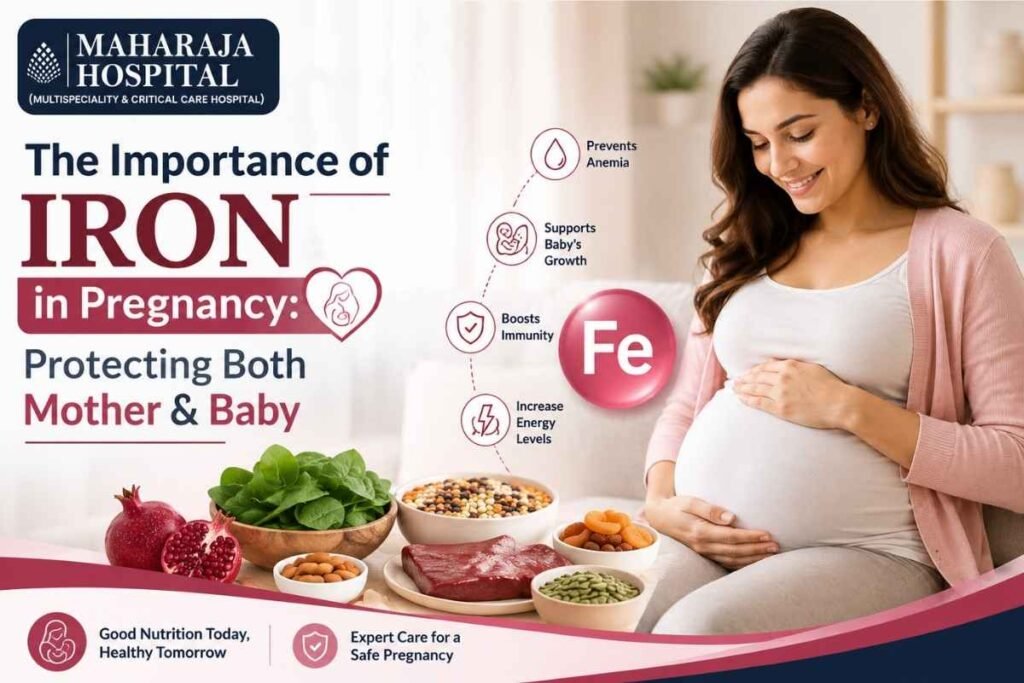
Pregnancy is a beautiful journey that brings many physical and emotional changes in a woman’s life. During these nine months, the body works continuously to support the growth and development of the baby. To maintain a healthy pregnancy, proper nutrition becomes extremely important, and one of the most essential nutrients during this phase is iron.
Iron plays a major role in keeping both the mother and baby healthy. A lack of iron during pregnancy can lead to weakness, fatigue, complications during delivery, and even affect the baby’s development. At Maharaja Hospital, we believe that awareness about maternal nutrition can help expecting mothers enjoy a safer and healthier pregnancy.
Why Is Iron Important During Pregnancy?
Iron is a mineral that helps the body produce hemoglobin, a protein found in red blood cells that carries oxygen throughout the body. During pregnancy, the body needs extra blood to supply oxygen and nutrients to the growing baby. This increased blood production raises the demand for iron significantly.
Without enough iron, the body cannot produce sufficient healthy red blood cells, which may result in iron deficiency anemia. This condition is quite common among pregnant women and can affect both maternal health and fetal growth.
Adequate iron intake helps in:
- Supporting healthy fetal development
- Preventing maternal anemia
- Reducing weakness and tiredness
- Maintaining energy levels during pregnancy
- Supporting healthy oxygen supply to the baby
- Lowering the risk of premature birth and low birth weight
How Much Iron Does a Pregnant Woman Need?
A pregnant woman generally requires more iron compared to normal adults. According to health experts, pregnant women may need around 27 mg of iron daily. This requirement becomes especially important during the second and third trimesters when the baby’s growth accelerates rapidly.
Doctors often recommend iron-rich foods along with supplements to meet this increased nutritional need.
Signs of Iron Deficiency During Pregnancy
Many women may not realize they are iron deficient because symptoms often develop gradually. However, some common warning signs include:
Constant Fatigue and Weakness
Feeling unusually tired even after proper rest can be a sign of low iron levels.
Dizziness or Headaches
Reduced oxygen supply due to anemia may cause frequent headaches or lightheadedness.
Pale Skin
Low hemoglobin levels can make the skin appear pale or dull.
Shortness of Breath
Iron deficiency can affect oxygen circulation, leading to breathing difficulties during normal activities.
Rapid Heartbeat
The heart may work harder to compensate for low oxygen levels in the blood.
If these symptoms are ignored, iron deficiency can become severe and may lead to complications during pregnancy and childbirth.
Risks of Low Iron During Pregnancy
Iron deficiency is not just about feeling weak. It can have serious effects on both the mother and baby if left untreated.
Risks for the Mother
- Severe fatigue and reduced immunity
- Increased risk of infections
- Higher chances of complications during labor
- Excessive blood loss during delivery
- Difficulty recovering after childbirth
Risks for the Baby
- Premature birth
- Low birth weight
- Delayed growth and development
- Increased risk of anemia in infancy
This is why regular prenatal checkups and blood tests are important throughout pregnancy.
Best Iron-Rich Foods for Pregnant Women
A healthy diet can naturally improve iron levels and support overall pregnancy health. Some excellent iron-rich foods include:
Green Leafy Vegetables
Spinach, fenugreek leaves, and kale are packed with iron and other essential nutrients.
Fruits and Dry Fruits
Dates, raisins, apricots, and pomegranates are helpful for maintaining healthy hemoglobin levels.
Protein Sources
Eggs, chicken, fish, and lean meat provide heme iron, which is easily absorbed by the body.
Legumes and Pulses
Lentils, beans, chickpeas, and soybeans are great vegetarian sources of iron.
Nuts and Seeds
Pumpkin seeds, sesame seeds, almonds, and cashews can support daily iron intake.
Whole Grains
Oats, brown rice, and fortified cereals may also help increase iron levels.
Tips to Improve Iron Absorption
Consuming iron-rich foods alone may not always be enough because the body also needs to absorb the iron properly.
Here are some simple tips:
- Include vitamin C-rich foods like oranges, lemons, tomatoes, and amla with meals
- Avoid tea or coffee immediately after eating because they reduce iron absorption
- Follow your doctor’s advice regarding iron supplements
- Maintain a balanced diet throughout pregnancy
Do All Pregnant Women Need Iron Supplements?
Not every woman requires the same amount of supplementation. Doctors usually recommend iron tablets after checking hemoglobin levels through blood tests. Women carrying twins, those with anemia, or mothers with nutritional deficiencies may require additional support.
However, self-medication should always be avoided. Excessive iron intake can also cause side effects like constipation, nausea, and stomach discomfort.
At Maharaja Hospital, our specialists carefully monitor maternal health and provide personalized pregnancy care to ensure both mother and baby remain healthy throughout the journey.
The Importance of Regular Pregnancy Checkups
Regular antenatal visits help doctors monitor nutritional levels, blood pressure, fetal growth, and overall maternal well-being. Early detection of anemia allows timely treatment and prevents serious complications later.
Maharaja Hospital offers advanced maternity care supported by experienced doctors and modern medical facilities. Along with pregnancy care, the hospital is also recognized as a trusted Orthopedic Hospital in Rewari providing comprehensive healthcare services for patients of all age groups.
The hospital is also known for advanced minimally invasive procedures including Laparoscopic Surgeries in rewari, ensuring quality treatment with modern technology and expert care.
Healthy Pregnancy Begins with Proper Nutrition
Pregnancy is a time when every small health decision matters. Iron is one of the most important nutrients that supports both maternal strength and healthy baby development. Ignoring iron deficiency can increase the risk of complications, while maintaining healthy iron levels can improve energy, immunity, and pregnancy outcomes.
Expecting mothers should focus on nutritious eating habits, regular medical checkups, and following medical advice throughout pregnancy. With proper care and guidance, women can experience a safer and healthier pregnancy journey.
At Maharaja Hospital, we are committed to providing compassionate maternity care, expert medical guidance, and complete support for mothers at every stage of pregnancy.