Left Arm Numbness: Common Causes, Serious Warning Signs & Treatment

Revision Knee Replacement: Warning Signs, Symptoms & When to Consult an Orthopedic Specialist
August 26, 2026
Chronic Low Back Pain Relief: How the Intracept® Procedure Can Provide Long-Lasting Results
September 2, 2026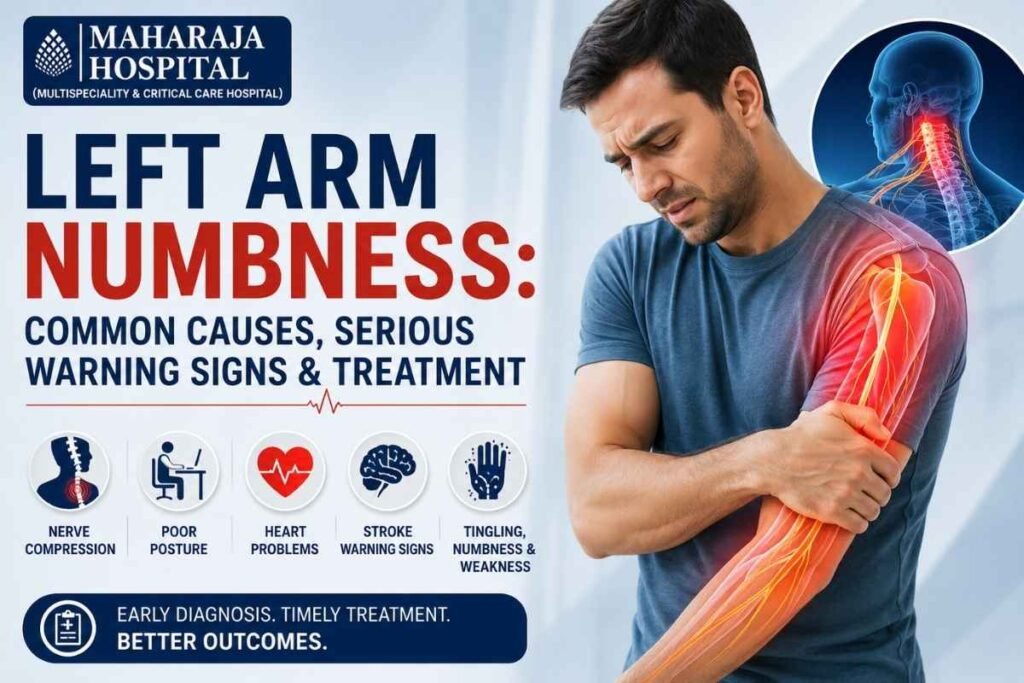
Numbness in the left arm can be caused by something as simple as sleeping in an awkward position or putting pressure on a nerve. However, it can also be a warning sign of a more serious condition, including a heart attack or stroke. The important thing is not to assume that every episode of numbness is harmless, especially when it starts suddenly or occurs with other symptoms.
Numbness generally means reduced or lost sensation. It may feel like pins and needles, tingling, burning, heaviness, or a complete lack of feeling. The underlying cause can involve nerves, the neck and spine, blood circulation, muscles and joints, or the brain.
What Causes Left Arm Numbness?
There are several possible causes of numbness affecting the left arm. Some are temporary, while others require medical evaluation.
1. Pinched Nerve
A compressed or irritated nerve is one of the common causes of arm numbness. Nerve compression can occur in the neck, shoulder, elbow, wrist, or elsewhere along the arm.
A pinched nerve in the cervical spine may cause numbness or tingling that travels from the neck into the shoulder, arm, or hand. It can also cause pain and weakness.
2. Cervical Spondylosis or Disc Problems
Age-related changes in the neck can affect the discs, joints, and bones of the cervical spine. A bulging or herniated disc, bone spur, or other changes can put pressure on nerve roots.
Along with numbness, patients may experience neck pain, tingling, arm weakness, or pain that travels down the arm.
3. Poor Posture and Prolonged Pressure
Sitting for long periods with the head and shoulders in an awkward position can contribute to neck and nerve irritation. Sleeping with the arm underneath the body or keeping the elbow bent for a prolonged period can also temporarily compress a nerve.
The numbness often improves once the pressure is removed and normal circulation and nerve function return.
4. Nerve Injuries
Falls, sports injuries, accidents, or repetitive strain can damage or compress nerves in the arm. Depending on the affected nerve, symptoms may include numbness, tingling, weakness, or loss of sensation.
5. Diabetes and Peripheral Neuropathy
Diabetes can damage peripheral nerves over time. Although diabetic neuropathy commonly affects the feet first, nerve problems can also affect the hands and arms. Other medical conditions and certain medications can also contribute to peripheral nerve damage.
6. Vitamin B12 Deficiency and Other Conditions
Vitamin B12 deficiency, certain autoimmune conditions, infections, and other neurological disorders can sometimes cause numbness or abnormal sensations. Because the causes are so varied, persistent or unexplained numbness should be assessed rather than self-diagnosed.
When Left Arm Numbness May Be an Emergency
This is the part that should not be ignored.
Sudden left arm numbness can sometimes occur during a heart attack, particularly when it is accompanied by chest discomfort, shortness of breath, sweating, nausea, lightheadedness, or discomfort in the jaw, neck, back, or other parts of the upper body. Heart attack symptoms can vary, and arm discomfort may affect one or both arms.
Left arm numbness can also be a sign of stroke when it begins suddenly, particularly if one side of the body is affected. Warning signs include:
- Sudden weakness or numbness of the face, arm, or leg
- Facial drooping
- Difficulty speaking or understanding speech
- Sudden vision changes
- Dizziness or loss of balance
- Difficulty walking
- A sudden, severe headache
The American Heart Association recommends seeking emergency help immediately when stroke warning signs appear, even if the symptoms disappear after a short time.
If sudden arm numbness occurs with chest pressure, breathing difficulty, facial drooping, speech problems, severe weakness, or other emergency symptoms, do not wait for it to improve on its own. Seek emergency medical care immediately.
Symptoms That May Occur Along With Arm Numbness
The symptoms accompanying numbness can provide useful clues about its possible cause. Depending on the underlying problem, you may experience:
- Tingling or pins-and-needles sensations
- Burning or unusual sensitivity
- Neck or shoulder pain
- Pain travelling down the arm
- Muscle weakness
- Difficulty gripping objects
- Reduced coordination
- Swelling or discomfort
- Numbness affecting specific fingers or areas of the hand
For example, cervical nerve compression may produce a combination of neck pain, arm pain, tingling, numbness, and weakness.
How Is Left Arm Numbness Diagnosed?
A doctor will first ask about when the numbness started, how long it lasts, whether it comes and goes, and whether it is associated with pain, weakness, neck problems, injury, or other symptoms.
A physical examination may assess:
- Muscle strength
- Reflexes
- Sensation
- Coordination
- Neck and shoulder movement
- Blood circulation
- Nerve function
Depending on the suspected cause, additional tests may include blood tests, X-rays, MRI scans, nerve conduction studies, or other investigations.
If the symptoms suggest a neurological or cardiovascular emergency, urgent testing may be required.
Treatment for Left Arm Numbness
Treatment depends entirely on the underlying cause. There is no single treatment that works for every type of arm numbness.
For mild nerve irritation or musculoskeletal problems, treatment may include rest, posture correction, physiotherapy, targeted exercises, and medications recommended by a healthcare professional.
If a cervical spine problem is responsible, treatment may focus on relieving nerve pressure and improving neck function. Many cases of acute cervical radiculopathy improve without surgery, although persistent weakness or significant nerve compression may require further specialist assessment.
For peripheral nerve injuries, treatment depends on the severity and location of the injury. Early evaluation can be important when numbness, tingling, weakness, or loss of sensation persists.
If an underlying condition such as diabetes or vitamin deficiency is contributing to the symptoms, managing that condition is an important part of treatment.
When Should You See a Doctor?
You should arrange a medical evaluation if arm numbness keeps returning, lasts for a prolonged period, gradually worsens, has no obvious explanation, or occurs with pain or weakness.
An evaluation by an experienced Orthopedics surgeon in Rewari may be appropriate when the symptoms appear related to the neck, spine, shoulder, joints, muscles, or peripheral nerves.
If the symptoms are associated with another condition requiring surgical assessment, your doctor may also recommend consultation with a general surgeon in Rewari when appropriate.
However, sudden numbness affecting the entire arm or one side of the body, particularly when accompanied by weakness, confusion, speech difficulty, dizziness, severe headache, chest discomfort, or breathing difficulty, should be treated as an emergency rather than a routine orthopedic problem.
Can Left Arm Numbness Be Prevented?
Not every cause can be prevented, but several habits can help reduce the risk of nerve and musculoskeletal problems.
Maintain good posture while working, avoid staying in the same position for extended periods, take regular movement breaks, use an ergonomic workstation, and follow safe techniques during exercise or lifting.
Managing conditions such as diabetes and addressing nutritional deficiencies can also help protect nerve health.
Final Thoughts
Left arm numbness can have many causes, ranging from temporary nerve compression to cervical spine problems and peripheral nerve disorders. In some situations, however, sudden arm numbness can signal a heart attack or stroke.
The most important factor is the pattern and accompanying symptoms. Persistent, recurrent, or unexplained numbness deserves medical evaluation, while sudden numbness combined with emergency warning signs requires immediate medical attention.
Rather than assuming the cause, getting the right diagnosis is the safest way to determine whether you need simple lifestyle changes, medication, physiotherapy, specialist care, or further treatment.