
Chronic Low Back Pain Relief: How the Intracept® Procedure Can Provide Long-Lasting Results

Left Arm Numbness: Common Causes, Serious Warning Signs & Treatment
August 27, 2026
Considering Knee Replacement? Understand the Tests, Alternatives & Lifestyle Goals
September 5, 2026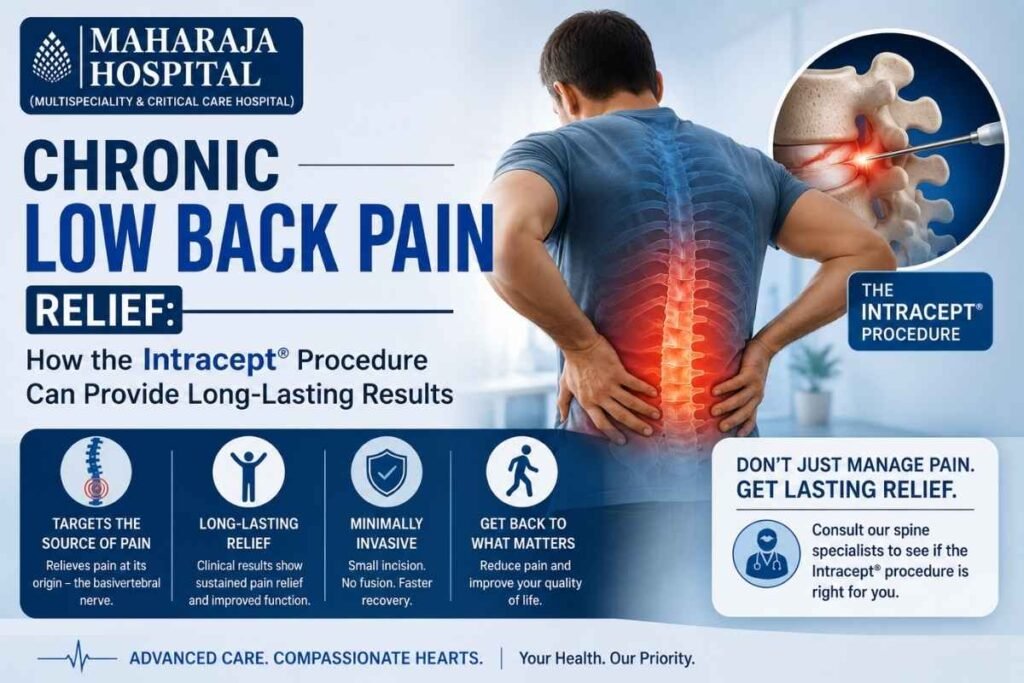
Chronic low back pain can affect almost every aspect of daily life. Simple activities such as walking, sitting, working, exercising, or sleeping can become difficult when pain continues for months or years. While treatments such as physical therapy, medication, lifestyle modifications, and injections can help many patients, some people continue to experience persistent discomfort despite trying different approaches.
For patients with a specific type of chronic low back pain called vertebrogenic low back pain, the Intracept® Procedure may provide another treatment option. This minimally invasive procedure is designed to target the basivertebral nerve, which can transmit pain signals originating from the vertebral endplates.
What Is Chronic Low Back Pain?
Chronic low back pain refers to pain in the lower portion of the back that continues for an extended period. There can be many potential causes, including degenerative disc disease, arthritis, spinal stenosis, muscle injuries, nerve-related problems, and changes affecting the vertebral endplates.
One specific source of chronic back pain is vertebrogenic pain, which originates from the vertebral endplates. Degenerative changes in these structures may contribute to persistent pain in some patients.
Identifying the actual source of pain is important because different causes require different treatment strategies. A detailed medical evaluation, physical examination, and appropriate imaging can help a specialist determine what may be contributing to the patient’s symptoms.
What Is the Intracept® Procedure?
The Intracept® Procedure is a minimally invasive treatment that uses radiofrequency energy to target the basivertebral nerve inside the vertebral body.
The basivertebral nerve carries pain signals from the vertebral endplates towards the central nervous system. When changes in the vertebral endplates are responsible for chronic pain, targeting this nerve may help reduce the transmission of those pain signals.
The procedure is performed using image guidance. A small access pathway is created into the vertebral body, allowing a specialised device to be positioned near the basivertebral nerve. Radiofrequency energy is then used to deactivate the targeted nerve.
Because it is minimally invasive, the procedure does not involve the large incision typically associated with traditional open spinal surgery.
Who May Be a Candidate for Intracept Treatment?
The Intracept Procedure is not appropriate for everyone experiencing lower back pain. Careful patient selection is an important part of the treatment process.
Patients who may be considered for basivertebral nerve ablation generally have chronic low back pain that is associated with vertebral endplate changes. A specialist may consider several factors before recommending treatment, including:
- Duration and severity of the pain
- Previous treatments and their effectiveness
- Physical examination findings
- MRI and other imaging results
- Whether symptoms are consistent with vertebrogenic pain
- Overall health and medical history
A thorough evaluation helps determine whether the basivertebral nerve is actually contributing to the patient’s pain.
This distinction is important because treating the wrong source of pain may not provide meaningful relief.
How Can Intracept® Help With Chronic Low Back Pain?
One potential advantage of the Intracept Procedure is its focus on a specific source of vertebrogenic pain rather than simply managing symptoms.
Conventional approaches to chronic back pain may include medication, physical therapy, exercise, activity modification, injections, and other conservative treatments. These options can be effective for many patients, but some continue to experience significant pain.
By targeting the basivertebral nerve, the Intracept Procedure aims to interrupt pain signalling associated with the vertebral endplates.
For appropriately selected patients, reducing chronic pain may help improve everyday activities and overall function. However, outcomes can vary, and no medical procedure can guarantee complete or permanent pain relief.
What Happens During the Intracept® Procedure?
Before treatment, the specialist reviews the patient’s symptoms, medical history, physical examination, and imaging studies. This helps determine whether the pain appears to be vertebrogenic in nature.
During the procedure, imaging technology is used to guide the physician. A small pathway is created to access the vertebral body, allowing the treatment device to reach the basivertebral nerve.
Radiofrequency energy is then delivered to the targeted area.
Following treatment, patients receive post-procedure instructions and appropriate follow-up care. Recovery varies from person to person and may depend on overall health, the underlying spinal condition, and individual response to treatment.
Intracept® Procedure vs. Traditional Back Surgery
The Intracept Procedure and traditional spinal surgery serve different purposes and are not interchangeable treatments.
Spinal surgery may be recommended when conditions such as significant nerve compression, spinal instability, or certain advanced structural problems require surgical correction.
The Intracept Procedure is specifically designed for appropriately selected patients with chronic vertebrogenic low back pain associated with the basivertebral nerve.
This makes accurate diagnosis particularly important. Not every patient with chronic back pain will benefit from the same treatment.
Consulting an experienced Orthopedics surgeon in Rewari can help patients understand the possible cause of their symptoms and determine which treatment options may be appropriate.
Potential Benefits of Intracept® Treatment
For suitable candidates, Intracept treatment for chronic low back pain may offer several potential benefits:
- Minimally invasive treatment approach
- Targets a specific pain pathway
- Does not require a large surgical incision
- May provide long-lasting pain reduction
- May improve physical function
- Could reduce the need for continued pain-management treatments
However, the suitability of the procedure depends on the individual’s diagnosis and overall condition.
When Should You See a Specialist for Back Pain?
Occasional lower back discomfort may improve with appropriate rest, activity modification, and conservative treatment. Persistent or worsening pain, however, should be evaluated rather than ignored.
You should consider consulting a specialist if your back pain:
- Continues for several months
- Interferes with your normal activities
- Keeps returning despite treatment
- Makes sitting, standing, or walking difficult
- Does not improve with conservative treatment
- Is accompanied by other concerning symptoms
A specialist can investigate whether the pain is coming from the vertebral endplates, discs, nerves, joints, muscles, or another structure.
Explore Your Chronic Low Back Pain Treatment Options
Living with chronic low back pain can significantly affect your comfort, mobility, and quality of life. Fortunately, advances in minimally invasive treatment have expanded the options available to appropriately selected patients.
The Intracept® Procedure is one option specifically developed for chronic vertebrogenic low back pain. By targeting the basivertebral nerve, it aims to interrupt pain signals originating from the vertebral endplates and may provide durable relief for suitable patients.
At Maharaja Hospital, patients can seek professional evaluation for persistent back and musculoskeletal problems and discuss suitable treatment options. Depending on the condition, care may involve conservative treatment, interventional procedures, or surgical management. If your condition requires broader surgical evaluation, a General surgeon in Rewari can also provide appropriate consultation.
If chronic low back pain continues despite previous treatment, a proper diagnosis is the essential first step. Discuss your symptoms with a qualified specialist to understand the underlying cause and determine which treatment approach is right for you.