Revision Knee Replacement: Warning Signs, Symptoms & When to Consult an Orthopedic Specialist

Distal Femur Fracture vs. Knee Fracture: Symptoms & Recovery
August 22, 2026
Left Arm Numbness: Common Causes, Serious Warning Signs & Treatment
August 27, 2026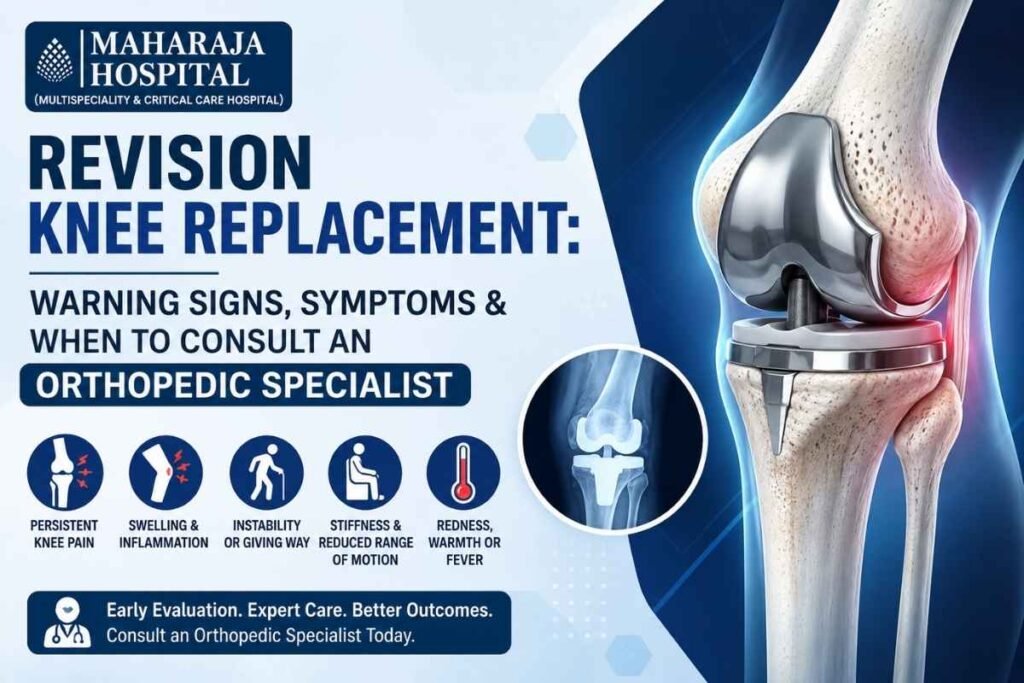
Knee replacement surgery can significantly improve mobility, reduce pain, and help people return to their everyday activities. However, in some cases, a previously replaced knee may develop problems that affect its function or comfort. When this happens, a revision knee replacement may be recommended.
Revision knee replacement is a procedure performed to repair or replace some or all components of an earlier knee replacement. It is generally more complex than the first surgery because the surgeon has to address the existing implant, surrounding bone, scar tissue, and the underlying reason for failure.
Understanding the warning signs can help patients seek timely medical attention and prevent a manageable problem from becoming more complicated.
What Is Revision Knee Replacement?
Revision knee replacement is a surgical procedure performed when an existing knee implant is no longer functioning properly. Depending on the problem, the surgeon may replace one component of the implant or remove and replace the entire artificial knee joint.
Unlike primary knee replacement, revision surgery often requires more detailed planning. The surgeon may use imaging tests, blood investigations, and other diagnostic methods to determine why the original replacement has failed.
The goal is to relieve pain, restore knee stability, improve movement, and help the patient regain better overall function.
Why Does a Knee Replacement Need Revision?
Modern knee implants are designed to last for many years, but they can eventually develop complications. Several factors may contribute to the need for revision surgery.
1. Implant Loosening
One of the common reasons for revision is loosening of the artificial joint. Over time, the connection between the implant and bone can weaken, resulting in pain, instability, or difficulty while walking.
2. Infection
Although uncommon, infection around a knee implant can be a serious complication. It may occur shortly after surgery or even years later. Persistent swelling, warmth, redness, drainage, fever, or increasing pain may require urgent evaluation.
3. Implant Wear and Damage
Artificial knee components can gradually wear down with use. Excessive wear may affect the stability and function of the joint and sometimes cause damage to the surrounding bone.
4. Knee Instability
Some patients may experience a feeling that the knee is giving way or becoming unstable. Repeated instability can interfere with walking, climbing stairs, and other daily activities.
5. Stiffness
Limited knee movement after replacement may sometimes become severe enough to interfere with normal activities. Depending on the cause and severity, revision surgery may be considered.
6. Fracture Around the Implant
A fracture in the bone surrounding the artificial joint, known as a periprosthetic fracture, can sometimes require revision surgery, particularly when the implant has become unstable.
Warning Signs That Should Not Be Ignored
Experiencing occasional discomfort after knee replacement does not automatically mean that revision surgery is necessary. However, certain symptoms should be evaluated by a qualified specialist.
Persistent or Increasing Knee Pain
Pain that continues or progressively worsens after a period of improvement deserves attention. New pain after years of comfortable knee function is particularly important to investigate.
Swelling Around the Knee
Persistent swelling can have several causes, including inflammation, implant problems, infection, or other joint-related conditions.
Difficulty Walking
If you suddenly find it harder to walk, stand, climb stairs, or perform routine activities that were previously comfortable, your knee should be evaluated.
Feeling That the Knee Is Giving Way
Repeated episodes of instability or a sensation that the knee may buckle can indicate a problem with the implant or surrounding soft tissues.
Reduced Range of Motion
A noticeable reduction in your ability to bend or straighten the knee may indicate stiffness or another mechanical problem.
Clicking, Popping, or Unusual Sensations
Some sounds from an artificial knee can be harmless. However, new or persistent clicking accompanied by pain, swelling, instability, or reduced movement should be assessed.
Redness, Warmth, or Drainage
These symptoms can indicate infection. If they occur along with fever or increasing pain, medical evaluation should not be delayed.
How Is a Failed Knee Replacement Diagnosed?
Before recommending revision surgery, an orthopedic specialist will typically try to identify the exact cause of the problem.
The evaluation may include:
- A detailed medical and surgical history
- Physical examination of the knee
- X-rays to assess implant position and surrounding bone
- Blood tests when infection is suspected
- Joint fluid analysis in selected cases
- CT or other advanced imaging when necessary
- Assessment of bone quality and implant stability
Identifying the underlying problem is critical because treatment depends on the cause. Not every painful knee replacement requires revision surgery.
When Should You Consult an Orthopedic Specialist?
You should consider consulting an Orthopedics surgeon in Rewari if you experience persistent pain, swelling, instability, reduced movement, or difficulty performing daily activities after knee replacement.
You should also seek evaluation if your symptoms are gradually worsening rather than improving.
Early assessment can be valuable because some complications may be easier to manage when identified promptly. Your specialist can determine whether conservative treatment, physiotherapy, medication, further investigations, or revision surgery is appropriate.
If symptoms suggest an infection, particularly when accompanied by fever, redness, warmth, or wound drainage, seek medical attention promptly.
What Happens During Revision Knee Replacement?
The exact procedure depends on the reason for revision. During surgery, the surgeon may remove damaged or loose components, treat infected tissue if necessary, repair bone defects, and insert new implant components.
In some complex cases, additional surgical techniques or specialized implants may be required to provide adequate stability.
Because revision surgery can be more technically demanding than the original knee replacement, careful preoperative planning and postoperative rehabilitation are important.
Recovery After Revision Knee Replacement
Recovery varies from person to person and depends on factors such as the reason for revision, the extent of surgery, bone quality, overall health, and the patient’s rehabilitation progress.
After surgery, rehabilitation may include:
- Physiotherapy and guided exercises
- Gradual improvement in walking ability
- Strengthening of the muscles around the knee
- Exercises to improve flexibility and range of motion
- Appropriate pain management
- Regular follow-up appointments
Following the rehabilitation plan carefully can support recovery and help restore knee function.
Can Revision Knee Replacement Be Prevented?
Not every revision surgery can be prevented. However, patients can take steps to protect their knee replacement and identify potential problems early.
Maintaining a healthy body weight, staying physically active within recommended limits, following rehabilitation instructions, avoiding unnecessary high-impact activities, and attending follow-up appointments can all be helpful.
Patients should also report new or persistent symptoms rather than assuming they are simply part of aging or normal implant wear.
Choosing the Right Specialist Matters
Revision knee replacement requires careful diagnosis, surgical planning, and postoperative care. Choosing an experienced orthopedic team is particularly important when the problem involves implant loosening, infection, significant bone loss, or instability.
If your symptoms involve another surgical condition alongside your orthopedic problem, your care team may also coordinate with a General surgeon in Rewari when appropriate.
Final Thoughts
A knee replacement that becomes painful, unstable, stiff, or difficult to use should not simply be ignored. These symptoms can have several possible causes, and revision surgery is only one of the available treatment options.
The key is to identify the underlying problem through proper evaluation. Early consultation with an orthopedic specialist can help determine the most appropriate course of action and potentially prevent further deterioration.
If you have previously undergone knee replacement and are experiencing persistent or worsening symptoms, professional evaluation can provide clarity about whether you need treatment, monitoring, or revision knee replacement.