
Chronic Neck Pain from Poor Posture: Lifestyle Modifications & Treatment Options

Hip Arthritis: Early Signs, Causes, Risk Factors & Treatment Options
July 30, 2026
Distal Femur Fracture vs. Knee Fracture: Symptoms & Recovery
August 22, 2026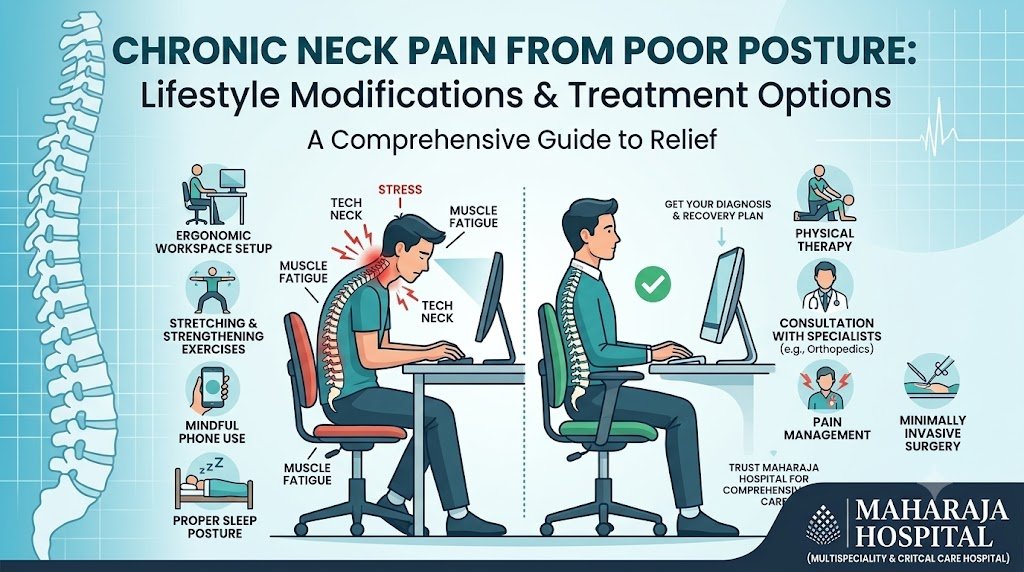
In our modern, technology-driven world, chronic neck pain has quietly become a global epidemic. Whether you are hunched over a laptop to meet a deadline, scrolling endlessly through a smartphone, or slouching on the couch after a long day, poor posture is likely taking a severe toll on your cervical spine.
For many, what begins as a mild, occasional ache at the base of the skull gradually transforms into persistent, chronic discomfort that interferes with work, sleep, and overall quality of life. Understanding the mechanics of how poor posture causes neck pain is the first step toward finding relief. In this comprehensive guide, we will explore the underlying causes of posture-related neck pain, practical lifestyle modifications, and the spectrum of treatment options available for long-term recovery.
The Mechanics of “Tech Neck”
To understand why poor posture causes so much pain, it helps to look at the anatomy of the cervical spine. The human head weighs approximately 10 to 12 pounds. When your ears align perfectly with your shoulders in a neutral posture, your cervical spine (the neck) and its surrounding muscles effortlessly support this weight.
However, when you lean your head forward—a position commonly referred to as “text neck” or “tech neck”—the dynamic changes drastically. Biomechanical studies reveal that for every inch your head shifts forward out of neutral alignment, the stress placed on your neck muscles and cervical joints effectively doubles. A mere two inches of forward head posture can force your neck to support the equivalent of 32 pounds.
Over months and years, this continuous excessive load leads to:
- Muscle Strain and Fatigue: The extensor muscles in the back of the neck and upper shoulders are forced to work overtime to keep your head from dropping forward, leading to chronic spasms and stiffness.
- Disc Degeneration: The spongy intervertebral discs that act as shock absorbers between your spinal bones experience uneven compression, accelerating wear and tear. This can lead to bulging or herniated discs.
- Nerve Compression: As spinal structures degrade or shift, the nerve roots branching out from the spinal cord can become pinched, causing radiating pain, tingling, or numbness down the arms.
Recognizing the Symptoms
Chronic neck pain caused by poor posture rarely presents as just a simple ache. The symptoms are often multifaceted and can include:
- Stiff Neck: A severe reduction in your range of motion, making it difficult to turn your head from side to side without sharp pain.
- Tension Headaches: Pain that radiates from the base of the skull upward, often wrapping around the forehead, caused by exceptionally tight suboccipital muscles.
- Upper Back and Shoulder Pain: Discomfort that spreads into the trapezius muscles and between the shoulder blades.
- Radiculopathy: If a nerve is compressed, you may feel electric, shooting pains, or a “pins and needles” sensation extending down your shoulder, arm, and into your hands.
Lifestyle Modifications to Protect Your Neck
The most effective way to combat posture-related neck pain is to address the root cause: your daily habits. Implementing the following lifestyle changes can dramatically reduce strain on your cervical spine.
1. Optimize Your Workspace Ergonomics
If you spend hours at a desk, your workstation setup is critical.
- Monitor Height: Ensure your computer screen is at eye level. You should not have to tilt your chin down to read text.
- Chair Support: Use a chair that supports the natural curve of your lower back. When your lower back slumps, your shoulders round forward, which inevitably pushes your head out of alignment.
- Arm Placement: Keep your elbows bent at a 90-degree angle, resting comfortably on armrests or the desk, to prevent your shoulders from shrugging upward.
2. Practice Mindful Smartphone Use
Smartphones are the biggest culprits behind the modern neck pain epidemic. Instead of bending your neck down to look at your phone, bring the device up to your eye level. Take frequent breaks from scrolling, and avoid tucking your phone between your ear and shoulder while multitasking.
3. Incorporate Movement and Stretching
The human body is designed for movement, not static postures. Adopt the “20-20-20 rule”: every 20 minutes, look at something 20 feet away for at least 20 seconds, and use that time to roll your shoulders and gently stretch your neck.
Targeted exercises can also help. Strengthening your core and upper back muscles (like the rhomboids and lower trapezius) provides a stronger foundation to keep your shoulders pulled back and your head aligned. Gentle daily neck stretches, such as chin tucks, can relieve tension and reinforce a neutral posture.
4. Upgrade Your Sleep Environment
You spend a third of your life sleeping, so your sleep posture matters immensely. Avoid sleeping on your stomach, as this forces your neck into a sustained, awkward twist. If you sleep on your back or side, choose an ergonomic pillow that supports the natural cervical curve without pushing your head too far forward or upward.
When to Seek Professional Treatment
While lifestyle adjustments and home remedies like hot/cold therapy or over-the-counter anti-inflammatories are excellent for mild, intermittent pain, chronic neck pain often requires medical intervention.
You should consult a healthcare professional immediately if your neck pain is the result of an acute injury, is accompanied by severe headaches or a high fever, or if you experience progressive numbness, tingling, or weakness in your arms and hands. These are “red flag” symptoms that suggest nerve damage or a more serious underlying condition.
For persistent joint, bone, and spine issues, an accurate diagnosis is crucial. For instance, if you are located in or around Haryana, consulting a reputable orthopedic hospital in Rewari can give you access to specialized diagnostics. An experienced orthopedic specialist can utilize X-rays, MRI scans, and physical evaluations to determine if your pain is simply muscular or if poor posture has led to structural issues like osteoarthritis or disc degeneration.
Advanced Medical and Surgical Options
When conservative treatments such as prescribed physical therapy, targeted massage, or chiropractic care fail to provide relief, doctors may explore more advanced options.
Interventional Pain Management
Treatments like corticosteroid injections or nerve blocks can be administered directly into the cervical spine. These injections powerfully reduce local inflammation around compressed nerves, offering significant pain relief that can last for months, allowing patients to participate more effectively in physical therapy.
Minimally Invasive Surgical Solutions
Surgery is almost always considered a last resort for posture-related neck pain, reserved for cases where nerve compression threatens long-term function or when structural damage is severe. Modern medical facilities strive to offer minimally invasive surgical techniques across all departments to ensure quicker recovery times and less tissue damage.
Top-tier multispecialty hospitals are equipped to handle complex procedures across various disciplines. Whether a patient requires delicate spinal decompression, joint reconstruction, or even advanced abdominal procedures like laparoscopic surgeries in Rewari, choosing a hospital that invests in high-tech, minimally invasive surgical infrastructure ensures that patients receive the safest and most precise care possible. In the context of spine surgery, this means smaller incisions, less post-operative pain, and a faster return to normal life.
Conclusion
Chronic neck pain stemming from poor posture is a pervasive issue, but it is not something you have to simply endure. By understanding the biomechanical toll that slouching and “tech neck” take on your spine, you can take proactive steps to change your daily habits.
Investing in ergonomic furniture, practicing mindful technology use, and committing to daily stretching can prevent and reverse muscular strain. However, if your pain persists, do not hesitate to seek out professional medical care. With the right combination of lifestyle modifications and expert medical treatment, you can overcome chronic neck pain and reclaim a comfortable, active life.