
Delayed Periods: Causes, Symptoms, and When You Should Actually Be Concerned
March 26, 2026
Understanding Knee Pain: Expert Insights by Maharaja Hospital
April 8, 2026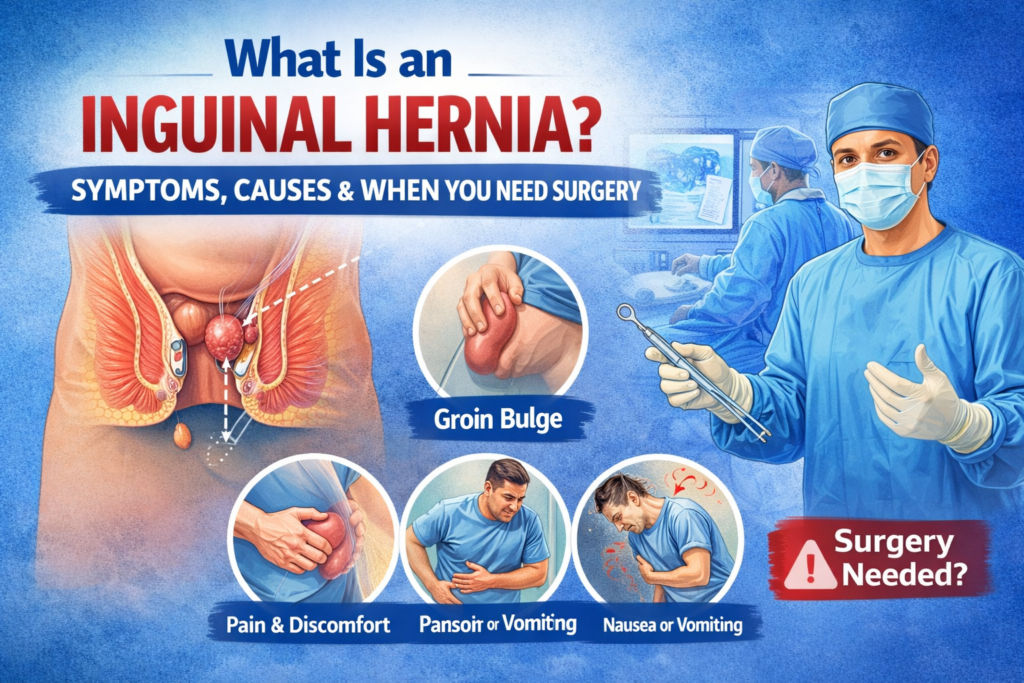
What Is an Inguinal Hernia? Symptoms, Causes and When You Need Surgery
An inguinal hernia is one of the most common types of hernias, especially in men. It may start as a small bulge in the groin area, but ignoring it can lead to serious complications over time. The problem is, many people delay treatment because the pain is mild in the beginning or comes and goes.
If you’ve noticed swelling in your groin or discomfort while lifting, coughing, or standing for long periods, this is something you shouldn’t ignore.
Let’s break this down clearly so you know what’s happening, why it happens, and when you actually need treatment.
What Exactly Is an Inguinal Hernia?
An inguinal hernia occurs when a part of the intestine or fatty tissue pushes through a weak spot in the abdominal muscles, usually in the groin area.
This creates a visible or noticeable bulge that may:
- Increase when you stand or strain
- Reduce when you lie down
- Cause discomfort or pain
In some cases, it may not hurt at all initially, which is why people tend to ignore it.
Types of Inguinal Hernia
Not all hernias are the same. Understanding the type helps in choosing the right treatment.
1. Indirect Inguinal Hernia
This is the most common type and is often present from birth due to a weakness in the abdominal wall. It can appear at any age.
2. Direct Inguinal Hernia
This type develops over time due to muscle weakness, usually in older adults. It is often linked to strain and aging.
3. Incarcerated Hernia
This happens when the hernia gets stuck and cannot be pushed back inside. It can lead to serious complications.
4. Strangulated Hernia (Emergency)
This is the most dangerous stage. Blood supply to the tissue gets cut off, leading to severe pain and risk of tissue death. This requires immediate surgery.
Common Causes of Inguinal Hernia
Hernias don’t just “happen” randomly. There are clear triggers behind them.
- Weak abdominal muscles
- Heavy lifting without proper support
- Chronic coughing
- Constipation and straining
- Obesity
- Previous surgeries
- Aging
In many cases, it’s a combination of weakness and pressure that causes the problem.
Symptoms You Should Not Ignore
Some symptoms are mild, but others are warning signs.
Early Symptoms:
- A small bulge in the groin
- Discomfort while bending or lifting
- Feeling of heaviness in the lower abdomen
Advanced Symptoms:
- Pain or burning sensation
- Swelling that doesn’t go away
- Nausea or vomiting (in severe cases)
- Sudden, intense pain (possible strangulation)
If you’re experiencing severe pain with a bulge that won’t go back in, don’t wait. That’s a medical emergency.
When Do You Need Surgery?
Here’s the honest truth — inguinal hernias do not heal on their own.
You can delay surgery if symptoms are mild, but the condition will not reverse naturally. Over time, it usually gets worse.
Surgery is recommended if:
- The hernia is growing
- Pain is increasing
- Daily activities are affected
- There is risk of complications
Delaying surgery too long can lead to emergency situations, which are more risky and complex.
Treatment Options for Inguinal Hernia
1. Open Hernia Surgery
This is the traditional method where the surgeon makes an incision to push the tissue back and strengthen the muscle wall.
2. Laparoscopic Hernia Surgery
A modern technique that uses small incisions and a camera to repair the hernia.
This method falls under advanced Laparoscopic Surgeries in rewari, offering:
- Smaller cuts
- Less pain
- Faster recovery
- Shorter hospital stay
Which One Is Better?
It depends on your condition.
- Larger or complicated hernias → Open surgery
- Smaller or moderate cases → Laparoscopic surgery
The right choice should always be based on medical evaluation, not just preference.
Recovery After Hernia Surgery
Recovery is usually smooth if you follow proper care.
What to Expect:
- Mild discomfort for a few days
- Return to light activities within a week
- Full recovery in 2–4 weeks (depending on procedure)
What You Should Do:
- Avoid heavy lifting
- Eat fiber-rich foods
- Stay hydrated
- Follow doctor’s advice strictly
Ignoring post-surgery instructions is one of the biggest reasons for recurrence.
Why Early Treatment Matters
Many people think, “It’s small, I’ll deal with it later.”
That mindset is risky.
A small hernia is easier to treat. A complicated hernia can turn into an emergency. Early treatment:
- Reduces pain
- Minimizes risk
- Ensures faster recovery
- Avoids emergency surgery
Choosing the Right Hospital in Rewari
The outcome of your treatment depends heavily on where you get it done.
A well-equipped hospital offering expert General Surgeries in rewari ensures:
- Accurate diagnosis
- Advanced surgical options
- Experienced surgeons
- Proper aftercare
If you are looking for reliable surgical care, choosing a trusted Orthopedic Hospital in Rewari like Maharaja Hospital gives you access to modern facilities and patient-focused treatment.
Final Thoughts
An inguinal hernia is not something you should ignore or try to manage on your own. It may seem minor at first, but it can lead to serious complications if left untreated.
The key is simple:
- Recognize the symptoms early
- Don’t delay medical consultation
- Choose the right treatment at the right time
If you’re noticing signs of a hernia, get it checked. Waiting doesn’t fix it — it only makes things harder later.